
Even a team of psychiatrists specializing in criminal insanity couldn’t say what Trump will do next
Rumble link Bitchute link
In today’s news…the bad news is that Trump’s potty mouth overflowed as he threatened to “beat the f*cking sh*t’ out of Iran.” The good news is that Trump appears to have defecated in his pants at Lindsey Graham’s funeral…which might conceivably render him slightly less full of sh*t.
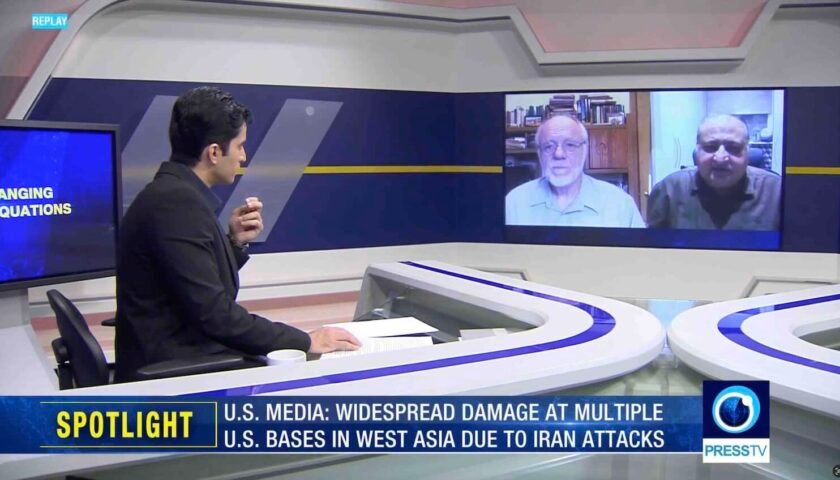
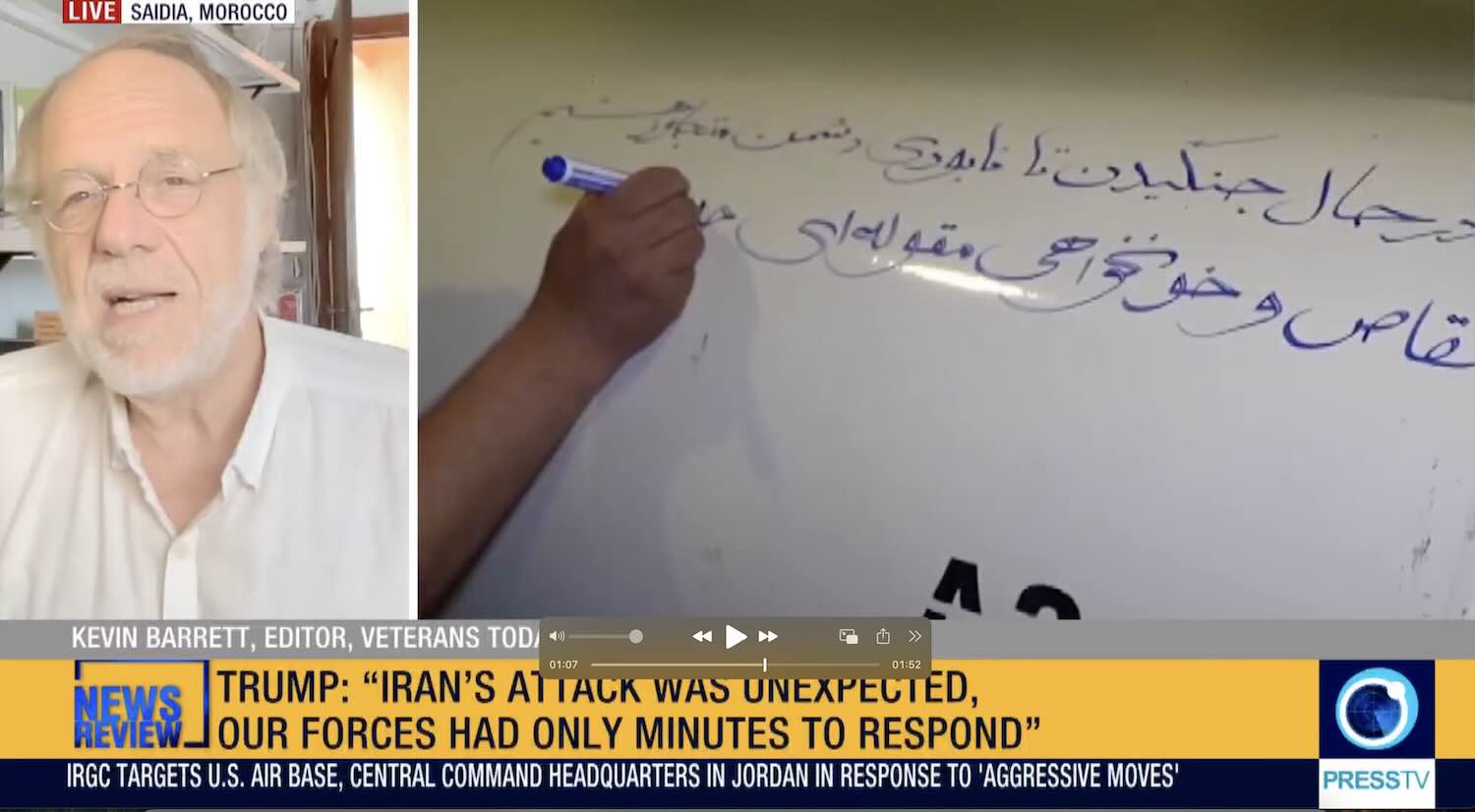
Below is a transcript of last night’s Press TV interview. Listen to the whole thing in the audio podcast file at the top of my Substack post, or watch the two-minute highlight video above.
Press TV: Well, it’s 6 p.m. here in Tehran and time for the news review. Welcome. Now, let me give you a recap of what’s been happening and what we’re going to talk about. We have been watching Iran, what another Iran is saying, as long asU.S. aggression against Iran’s civil infrastructures Iran will retaliate. And that’s what Iran has done. And the continuation of that, IRGC hit U.S. Air Base and headquarters in Jordan. And now Mr. Trump is going mad and saying that I’m going to hit Iran hard again. Of course, it’s not the first time this has been going on. Iran is also asserting its control over the Strait of Hormuz and IRGC Navy, the Iranian Army. They are both asserting their control there. And almost every day they are stopping a number of ships that have been trying to cross the Strait without Iran’s authorization.
And of course the same talks are ongoing between Iran and the two coastal states to come up with a certain mechanism for arrangements of transit. So this is what we are going to talk about. Allow me to introduce my guests. In our studio in Tehran, we have Khomeira Ahad. And also we have Kevin Barrett joining us from Saidia in Morocco.
Okay, let’s begin with Tehran, if you allow me, Kevin, so that Khomeira will just bring us some information and give us some more details regarding the goings on recently. Khomeira, do you think this is going to further escalate? Or is it going to come down? Because, if you remember the way Mr. Trump usually puts it whenever he says he’s going to do something big time and then the next day or five minutes later he changes his mind, he said let’s turn to the negotiating table.
Khomeira Ahad: No, but I think that it is going to escalate. And the things which we have been seeing in the last few months point to that, that there will be escalation again . We know that in the last 24 hours, the IRGC has pounded American bases in Jordan, and ballistic missiles have been fired. The IRGC has been quite clear in saying that as long as unlawful hostile actions are carried against the Islamic Republic of Iran, and as long as the threats continue against Iran, retaliation will follow. And that is what we saw in the last 24 hours.
And now we are seeing again very inflammatory rhetoric fromTrump. He has said in the last couple of hours that he’s going to again hit Iran very badly. And that’s not something new, as you already mentioned. In the last few months, if not a year or two, we have been seeing Trump again and again issuing this type of inflammatory rhetoric. And Iran has said as long as this inflammatory rhetoric continues, these types of threats continue, the American side will face retaliation from Iran. As a result of these threats, we are also seeing an effect on the world markets. According to reports, the Brent oil prices have again risen. And if the escalation continues, then we are going to see a huge effect on the global markets.
Press TV: Great. Okay. Turn to Morocco now. Kevin, good to have you with us. So how do you look at things? Where is this leading?
Kevin Barrett: Well, people have remarked on the parallels between Trump’s repeated threats and then his equally delusional claims that he’s been negotiating with imaginary Iranians. “It is very close to an agreement.” He typically issues the threats usually towards the end of the week so that the weekend will come and they won’t disrupt the markets too much. And then he usually says he’s been negotiating with his imaginary Iranian friends and is close to a deal on Monday to try to calm the markets leading into the week. But this time he is ranting and raving with his bizarre extreme threats in the middle of the week.
So who knows what that means? I don’t think that even Trump’s psychiatrist knows what Trump is really thinking. So rather than worrying about Trump’s psychology, which is pretty much a case for a whole team of psychiatrists specializing in narcissism and psychopathy, I think we should look at what’s actually going on on the ground, where the military shipments are going, and so on. And then, of course, what’s really going on with the energy trade, energy markets. In other words, the real-world factors here. And those real-world factors are that Trump and his administration are caught in what Robert Pape calls an escalation trap.
They can’t get anything even remotely close to what they want. They have no idea really what they’re doing. They took Netanyahu’s advice and got into this ill-advised war, imagining that their goal was to somehow magically regime-change Iran and turn it into a Zionist colony. And that, of course, was never going to happen. And now they’re stuck with Iran inevitably coming out of this war stronger than it was before. And so they don’t want to accept that, but they have no answer for it.
And the dynamics here, yes, the Americans are sending more material to the region, which means probable escalation. But what can they do? They’ve already bombed the targets they can bomb. Iran still has a lot more targets left for its missiles. The Americans have used up most of their standoff munitions, and the military is screaming at Trump that “it’s dangerously low. If China tries anything, we can’t do anything.” And so on. And so the overall situation right now is Groundhog Day. Trump is screaming and yelling again. He may do some more bombings. Iran has escalation dominance and will answer them. And we’re going to be back to square one until the Americans finally honor the MOU.
Press TV: Speaking of energy markets that you also mentioned and rising oil prices and difficulties, you know, being actually a cause for many people, not only in the region, but maybe elsewhere across the planet. Trump is saying that Iran is doing this. This is collective punishment. But Hormuz did not used to be like this. It was calm. So who caused this? I mean, who’s to blame for this? Iran or President Trump’s policies and warmongering?
Khomeira Ahad: You’re absolutely right about people saying that Hormuz was not like this and countries saying that it was all calm. Yeah, absolutely. It was all calm. The vessels were passing through the Strait of Hormuz without any effect. Iran was providing security without being paid. But who started it is the question which requires being pondered upon. And the answer is, it is America and Israel whose attack led to what we are seeing now, to what the world economy is facing the brunt of. And because of the aggression that was started by the United States and Israel on 28th February, Iran had to retaliate in this way.
We have been seeing in the last few months, starting from the last year in June and continuing till now, what type of aggression has been exercised by America and Israel. The leader of the Islamic revolution, the martyred leader, was even assassinated. Hospitals attacked, schools attacked, 168 young children, primary schoolchildren killed in Minab. The list continues. The aggression: bridges, civilian infrastructure destroyed. And the world, apart from taking notice of what is being done to Iran, is talking about Iran restricting the passage shipping in the Strait of Hormuz.
All the international laws have been violated by the United States and Israel, and this happened amidst negotiation. The first 12-day war, which happened last year in June, took place when Iran was undergoing negotiations with America, and it was the fifth or sixth round of negotiations. Next was the 40-day war, which started on 28th February with the assassination of the leader of the Islamic revolution. It happened when the third round of negotiations were taking place. And even the Omani foreign minister said that Iran was giving lots of concessions.
So taking that near history into consideration, we know what type of aggression is going against Iran for the last few months. We have seen in the last few months how it has played out positively for Iran. And it is because of the Strait of Hormuz that Trump was forced to come to the negotiating table, though he again violated the negotiation, which is his modus operandi. But he was forced to stop his aggression against Iran or restrict his aggression against Iran because it was having an effect on world economy and he could not control the world economy, the rising prices, even in the American mainland. So the Strait of Hormuz is the only option helping Iran prevent further aggression.
Press TV: Right. Okay, Kevin, yesterday we had Netanyahu’s visit to the US. What was he whispering in Trump’s ears? He said he has had the best meeting ever with Trump. What is it that could be probably asking President Trump to do?
Kevin Barrett: That’s a great question. It’s actually unclear, because we had simultaneously that claim from Netanyahu that it was the best ever meeting with Trump. And then at the same time, there were reports that it was unusually short, that Netanyahu snuck in through the back door and was snubbed. So maybe Netanyahu was exaggerating or trying to cover up the fact that it wasn’t such a great meeting. That’s a possibility. Or on the other hand, maybe there’s some truth beneath that claim. Maybe Netanyahu once again has pulled out his Epstein blackmail evidence of what Trump may have done to young girls like Katie, who sued him for brutally raping her in the presence of Jeffrey Epstein when she was 13 years old. And Netanyahu may have flashed that kind of material at Trump to try to force him to follow Israel’s orders to escalate the war on Iran. Who knows what really happened in that meeting when two of the world’s worst war criminals occupied the same space briefly. We certainly know that Congress isn’t applauding Netanyahu the way they used to anymore, and that the American people have turned against Israel. There’s been a 70% collapse in support for the Zionist entity among the American public,according to Pew Research, over the last eight years. So, however that meeting went, the American—
Press TV: Kevin, sorry for jumping in. Please tell me who’s actually controlling the whole thing? Who is under whose thumb? Is it Mr. Trump who is simply materializing the whims and wishes of Netanyahu, or does Trump have his own mind?
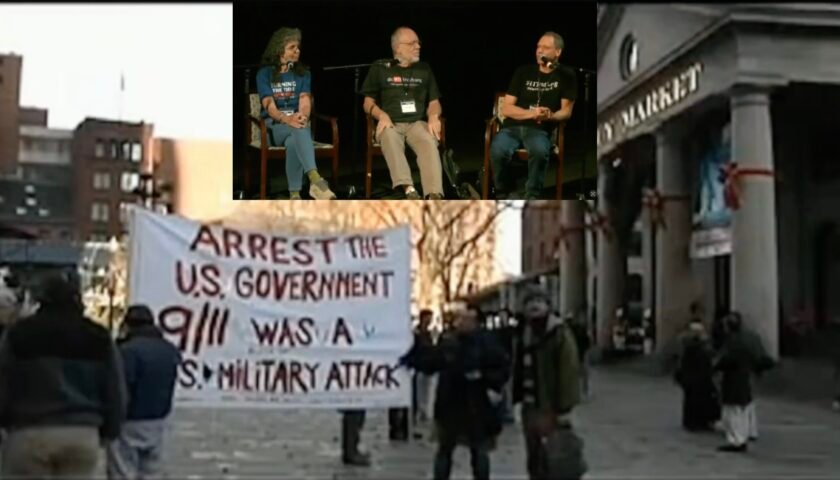
Kevin Barrett: Well, certainly Trump doesn’t have much of his own mind. He doesn’t have much of a mind at all. He’s a very impulsive individual with narcissistic personality disorder and low impulse control. So I think he’s been manipulated. I think he spent his entire life as a frontman for what Americans sometimes call the kosher Nostra, that is, a certain ethnic organized crime syndicate that dominates the United States, killed the Kennedys, did 9/11 among other crimes, probably killed Charlie Kirk as well.
I think Trump has been a money launderer and a front man for that crime syndicate for his whole adult life. I don’t think he’s very independent, unfortunately. On the other hand, the fact that he is such a loose cannon and nobody can ever predict what he’s going to say or do might mean that he’s capable of intentionally biting that Kosher Nostra hand that feeds him, especially if he’s forced to do so by his own military and strategic establishment, which sees that he’s gotten the United States into a terrible mess with this very ill-advised attack on Iran, which was very much at the instigation of the Israelis and not of any strategic thinkers from the American side.
Press TV: Okay. Khomeira, speaking of the U.S. and the polls conducted there, we also see President Trump’s popularity going down. People are not satisfied with his performance, especially when it comes waging war against Iran. Many don’t want that war. They don’t want taxpayers’ money to be going down the drain with a useless war.
Khomeira Ahad: Yeah, you are absolutely right. This is the only war in recent history which doesn’t have any support amongst the American people. And the wars which were fought by America in the recent past in Afghanistan, Iraq, the media also played a role to promote that false propaganda. We know about Iraq that false propaganda about weapons of mass destruction was fed to the American public, and about the World Trade Center.
There are still lots of theories about that. Who did it? Was it an inside job? Not going much into it. But a sort of ground was built amongst the American public where support was garnered for these wars. According to statistics, the Iraq war had 70% support approximately when the war started. As far as the Afghanistan war is concerned, 90% support. But since the onset of war against Iran, it has not had any support from the American public. No ground was set before this war was started. So it’s the most unpopular war amongst the Americans, and not only amongst Americans, but the whole world.
Trump did not provide any logical reason to wage a war against Iran. Yeah, we know there has been false propaganda in the Western media against Iran for the last 48 years. We are seeing this again and again in different countries. Trump’s support is decreasing, and one of the most important reasons for this decrease in support is that he violated his idea of making America great again, where he said he would say that he doesn’t want to start any foreign wars. And now he is against his own statements, and that has decreased in his popularity. And we are seeing even among the Republican base also, he is losing support. The Iran war is becoming a political graveyard for Trump.
Press TV: Kevin, Trump began singing this rhetoric saying, we’re going to hit them hard. And he’s been hitting it hard. And you know where he’s been hitting mostly, civil infrastructure: people, hospitals, schools, wherever they can hit. But this has been going on, this vicious circle, going on and on. Is Trump going to learn one day that this simply doesn’twork?
Kevin Barrett: Some of his advisors are afraid to tell him that, but others, maybe J.D. Vance,maybe some of the military people, are trying to whisper in his ear and say, look, there’s never been a case in history where bombing civilians ever convinced any country. It’s the opposite. It just makes them angry and consolidates support for their war effort. And if there’s any country where that’s going to be true, it’s Iran, because Iran has a national identity that has a large element of Shia Islam, where the martyrdom of a long line of imams, including Hussein, has forged an attitude of standing up against injustice. Martyrdoms don’t help the murderers when you’re fighting that kind of country, more so than any other country. The idea that hitting these civilian targets in Iran is somehow going to help his cause is so obviously false that I have a hard time believing that any of his advisors are not trying to disabuse him of it.
And they also are fully aware that Iran has that escalation dominance. That is, anything that is done to Iranian infrastructure, Iran can do the same thing to the countries on the other side of the Gulf, and to some extent the Zionist entity as well. In fact, actually worse. Again, Iran has that escalation dominance, even if it gets into these war crimes of targeting civilian infrastructure, which is what this is. Trump’s even threatening to do that. He’s openly stated that he does it. That’s a war crime in itself. And then when he actually does that, he hits bridges, hospitals, schools. This is an extreme war crime. And so he’s setting himself up for all kinds of trouble, not just political trouble, as the other guest mentioned, complete collapse of the nonexistent support that this war had at the beginning. But then when the economy tanks, even worse than it has already, he is likely to end up with a Congress that hates him and is ready to dig into his misdeeds, and he could easily end up in prison, as could Netanyahu.
Press TV: Now, Khomeira, how can both sides get out of this no-war, no-peace state? Because Iran has never initiated any war. Iran is not in favor of any war. But when a war is waged against Iran, Iran has to defend itself, and that’s what it is doing. But you see, we have on the other side a President Trump who is not being honorable. And he’s actually threatening, and then he says, “now let’s turn to the negotiating table. We’ve been in deep negotiations with them. Hopefully we’ll get some good news.” And then immediately afterwards, he says, “we’re going to give them a beating.”
Khomeira Ahad: Yeah, you’re absolutely right. Coming out of this sort of quagmire is difficult, because Iran has been retaliating. Iran has not started this war. All the type of whatever aggression Iran faced, Iran just retaliated to those strikes.
Talking about negotiation and diplomacy is quite difficult because we are seeing that Trump does not stand by his word. Trump signed—it’s really very bizarre to even accept that the President of the United States signs a document and then he doesn’t adhere to it even for two weeks, and he again starts the aggression. Diplomacy for him means nothing. And he’s the same person who tore up the JCPOA when he first became the President of the United States of America.
So for Iran, to trust them again and again has been difficult. And we have seen Iranian diplomats again saying that they are going into negotiations with complete mistrust. They know the Americans have been dishonest again and again. And now, very apparently and in a really bizarre way, we have seen what Trump has done in the last few weeks.
There are people inAmerica like American diplomat, Robert Malley, everybody knows his name. He was one of the chief negotiators during the JCPOA. And during the Biden administration, he was given the Iran portfolio. In a recent interview, he said that if Iran now decides to make a nuclear weapon, it would be very logical. And for them to trust diplomacy, to trust Trump, is almost impossible.
So even American diplomats, the people who have been in the American bureaucracy, have been saying that the way this American president has been behaving, it’s almost impossible for the Iranian side to now trust him or trust any of the things which he guarantees on paper.
Press TV: Okay. Kevin, how do you see things actually unfolding? Do you anticipate further escalation Do you think the negotiation will work? Is Trump the kind of person you can trust? Will he be in compliance with any deal? What happened to the Islamabad MOU?
Kevin Barrett: Well, obviously, you can’t trust Trump. You can’t really trust the United States policy, even outside of Trump. The Obama administration did not fully abide by its obligations under the JCPOA, and the Biden administration either. But of course, Trump has taken this to new levels of blatant mendacity. So no, obviously Iran cannot trust Trump at all.
From now on, the MOU has to be implemented before Iran even talks to the Americans anymore. In other words, if the United States goes ahead and tells Israel to get out of Lebanon, abides by its obligations, releases Iran’s cash, and backs off in Hormuz and stops attacking Iran, then maybe there will be something to talk about. But if that doesn’t happen, what’s the point of talking when the other party has violated the last solemnly signed agreement that you made with them? That would be completely stupid to keep trusting somebody who’s repeatedly pulling the rug out from under you. So I think it all has to be up front next time. In other words, Iran won’t accept any promises. It will only accept actions and realities.
Press TV: Okay, we’ve got one minute left if you want to make a conclusion.
Khomeira Ahad: Even now, we saw recently what Trump said. His rhetoric has really been very inflammatory. And we saw how IRGC responded. They said any ship which will take the compensation of Iranian frozen assets will not get a safe passage of the Strait of Hormuz. So what we are seeing through the messages, even those Trump is communicating to the Iranian side, is that he is not honest. He doesn’t want to have any diplomacy with Iran. He doesn’t want to have any real and fair deal with Iran, even if he says diplomacy is going on. The way he has been behaving, the words he has been saying, the statements he has been issuing are really totally contrary to the diplomacy or contrary to, you know, a country which wants to have issues resolved.